Italy Digital Nomad Visa 2026: The Ultimate Guide for Remote Workers
For years, non-EU citizens dreaming of moving to Italy faced a rigid bureaucratic wall. Unless you were a student or had a local employer sponsoring you, options were limited.
The popular Elective Residence Visa was often a trap: it allowed residency but strictly prohibited any form of work, even remotely.
Starting with the full implementation of the decree of February 29, 2024, and solidifying in 2026, the landscape has finally changed. The Italian Digital Nomad Visa (established under Art. 27-quater of the Consolidated Immigration Act) is now fully operational. This visa is designed specifically for high-net-worth professionals who wish to enjoy the Italian lifestyle while maintaining their foreign employment.
However, applying is not merely a formality. The Italian government has set high standards to ensure that only financially independent and highly qualified individuals qualify. This guide explores the regulatory framework, the income thresholds for 2026, and the correct procedure to navigate the Consulate.
Who Is Truly Eligible? Understanding the Distinction
The legislation is very specific about who qualifies as a "digital nomad." It is not enough to simply have a laptop and a desire to travel. The law creates a clear distinction between two types of remote workers, though both fall under the same visa category:
- Digital Nomads: These are freelancers and self-employed professionals who perform their activities remotely for multiple clients located outside of Italy.
- Remote Workers: These are employees with a stable contract who work remotely for a single employer or company that is based outside of Italy.
The "Highly Qualified" Barrier
The most overlooked requirement—and the most common reason for rejection—is the professional qualification. Italy treats Digital Nomads as "Article 27" workers, meaning they must meet the Highly Qualified standards set by Legislative Decree 286/98.
In practical terms, you cannot apply for this visa with entry-level experience. You must demonstrate that you possess:
- A University Degree: A bachelor's degree (at least 3 years) is the standard proof of qualification.
- Alternative Professional Experience: If you do not hold a degree, you may still qualify by proving at least five years of documented professional experience in the specific sector you intend to work in.
Financial Requirements for 2026: The €28,000 Threshold
Unlike other visas where discretionary income can be vague, the Digital Nomad Visa has a precise mathematical requirement. The Italian government wants to ensure that you will not be a burden on the national welfare system.
For 2026, the minimum annual income required is approximately €28,000.
Why this specific number? The law states that the applicant must possess an annual income strictly from lawful activities that is at least "three times the minimum level required for exemption from healthcare contribution costs."
Important Note on Income: Consulates are strict about the source of these funds. Savings in a bank account are often not enough; you must show a consistent flow of income. Tax returns from the previous year and current bank statements showing regular deposits are the best way to prove your financial stability. If you plan to bring family members through the Family Reunification process, this income threshold increases for each dependent.
The Application Process: From Consulate to Questura
The path to obtaining this visa is a two-step process involving authorities in your home country and in Italy.
Step 1: The Consular Phase
You cannot apply for this visa while you are already in Italy on a tourist visa (the famous "90-day Schengen rule"). You must submit your application at the Italian Consulate or Embassy in your country of permanent residence (e.g., New York, Los Angeles, London).
You will need to book an appointment via the Prenot@Mi portal. Be prepared: slots fill up quickly, and securing an appointment can take weeks. During the interview, you must present your physical passport and the complete dossier of documents.
Step 2: Arrival in Italy and the "8-Day Rule"
Getting the visa stamped in your passport is only half the battle. Once you enter Italy, you are on a strict clock. Italian immigration law mandates that within 8 working days of your arrival, you must apply for the Permesso di Soggiorno (Residence Permit).
This is done by visiting the Questura (Police Headquarters) of the province where you have chosen to live. Failure to report within this timeframe can technically void your legal status, so it is crucial to have your accommodation sorted before you land.
Document Checklist for 2026
To avoid delays or rejections, your application dossier must be complete. Consular officers have little patience for missing paperwork. Ensure you have the following:
- Valid Passport: It must be valid for at least 3 months beyond the expiration date of the requested visa.
- Proof of Remote Work:
- Employees: A letter from your employer confirming your role, your annual salary (meeting the €28k requirement), and explicitly authorizing you to work remotely from Italy.
- Freelancers: Service contracts with clients and invoices.
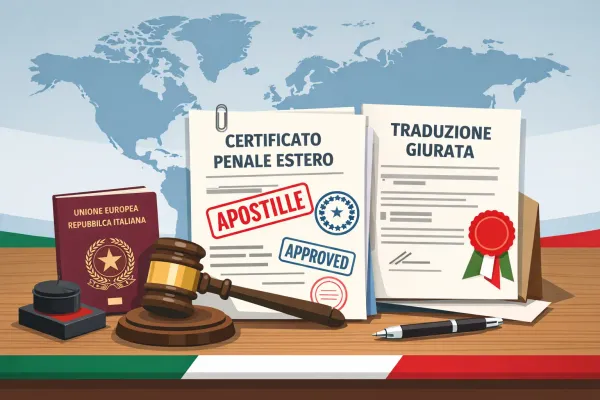
- Clean Criminal Record: A background check issued by the authorities of your country (e.g., an FBI Background Check for US citizens) showing no criminal convictions in the last 5 years.
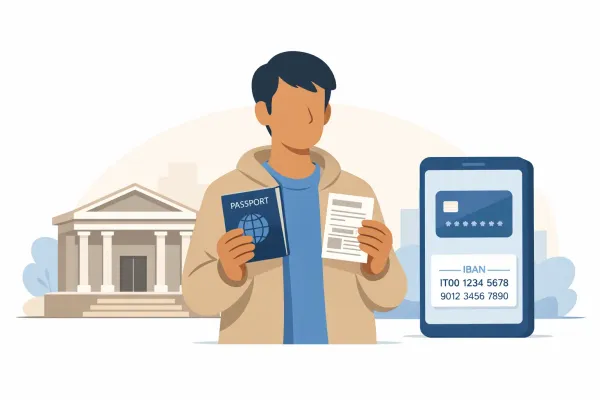
- Health Insurance: A private health insurance policy valid for the entire duration of your stay (1 year). It must cover all medical expenses and hospitalization in Italy, with coverage limits usually exceeding €30,000.
- Proof of Accommodation: You cannot stay in a hotel. You need a registered rental contract or a deed of ownership for a property in Italy.
- Experience Proof: Documentation proving at least 6 months of experience in the specific remote work field you plan to perform.
Taxation and the "Regime Forfettario"
One of the biggest draws for moving to Italy in 2026 is the tax structure for new residents. While tax law is complex and requires a professional accountant (Commercialista), digital nomads often benefit from the Regime Forfettario.
This simplified tax regime is available for freelancers with an income up to €85,000. It offers a flat tax rate of 5% for the first five years, replacing the standard progressive IRPEF rates which can go up to 43%. However, becoming a tax resident in Italy (by living there for more than 183 days a year) means you will be subject to Italian taxes on your worldwide income, so planning ahead is essential.